
Introduction
Writing is more than putting words on paper; it is a vital skill for students to express ideas, communicate knowledge, and showcase creativity. Strong writing skills help students excel academically, develop critical thinking, and build confidence in their communication abilities. However, many students struggle with where to start, how to organize ideas, and how to make their writing compelling.
This guide provides practical and detailed writing techniques for students that cover everything from planning to polishing, ensuring that learners can produce clear, coherent, and engaging writing.
Understanding the Purpose of Writing
Before writing, a student must understand why they are writing. The purpose of writing influences tone, structure, and style. Common purposes include:
- Informative Writing: Aims to educate the reader by providing facts, explanations, or instructions. Examples include essays, research papers, or reports.
- Persuasive Writing: Designed to convince the reader of a particular viewpoint. Examples include opinion essays, debates, or proposals.
- Narrative Writing: Tells a story, shares experiences, or entertains the reader. Examples include short stories, novels, or personal narratives.
- Reflective Writing: Focuses on personal experiences, thoughts, or learning processes. Examples include journals or reflective essays.
Understanding the purpose helps students select the right tone, structure, and content for their writing.
Planning Your Writing: Brainstorm, Outline, and Organize
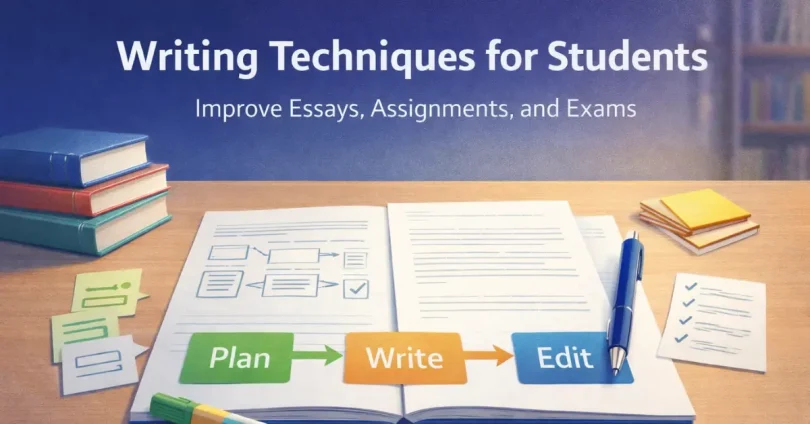
Planning is the foundation of good writing. Students should spend time organizing their thoughts before starting.
Brainstorming
Brainstorming is the process of generating ideas without judgment. Students can:
- List all ideas related to the topic
- Use freewriting, writing continuously for 5–10 minutes without stopping
- Create mind maps to visualize connections between ideas
Outlining
Once ideas are generated, organizing them into a structured outline helps in maintaining a logical flow:
- Introduction: Introduce the topic and provide a thesis statement
- Body Paragraphs: Present main points with supporting evidence or examples
- Conclusion: Summarize key points and restate the thesis
Outlining ensures that students stay focused and prevents gaps in their writing.
Crafting a Strong Introduction
The introduction is the first impression a reader gets. A well-written introduction:
- Hooks the reader with an interesting fact, question, or anecdote
- Introduces the topic clearly to set expectations
- States a thesis outlining the main argument or purpose
Example of an effective introduction:
“Writing is not just a school assignment; it is a way to express ideas, share knowledge, and influence others. Yet, many students struggle to communicate effectively on paper. This guide explores practical writing techniques to help students develop strong, confident writing skills.”
Writing Clear and Cohesive Body Paragraphs
The body paragraphs are where the main content resides. Effective body paragraphs:
- Start with a topic sentence: Clearly states the main idea of the paragraph
- Provide supporting evidence: Facts, examples, statistics, or quotes strengthen arguments
- Maintain coherence: Use transition words like furthermore, however, or in addition
Example:
“Using transition words enhances the flow of writing. For instance, words like ‘however’ and ‘consequently’ help the reader understand the relationship between ideas, making the text easier to follow.”
Writing Techniques for Vocabulary and Word Choice
A strong vocabulary makes writing more precise and engaging. Students should:
- Use specific words instead of vague terms (e.g., “enormous” instead of “big”)
- Avoid repetition by using synonyms
- Choose academic or formal words for essays and research papers
- Avoid slang or overly casual language in academic writing
Expanding vocabulary can be achieved by reading widely and noting new words.
Mastering Sentence Structure and Style
Variety in sentence structure keeps readers engaged. Students should:
- Mix short and long sentences for rhythm
- Use active voice whenever possible
- Avoid run-on sentences and fragments
- Use rhetorical questions or figurative language for impact
Example:
“Passive: The experiment was conducted by the students.
Active: The students conducted the experiment successfully.”
Developing Critical Thinking in Writing
Writing is not just about grammar; it’s about thinking critically. Students should:
- Analyze and evaluate information instead of merely stating it
- Compare and contrast different viewpoints
- Support opinions with evidence
- Identify cause-and-effect relationships
Critical thinking makes writing persuasive and credible.
Editing, Revising, and Proofreading
Editing is where good writing becomes great. Students should follow a three-step process:
Editing
Focus on content and structure:
- Check if ideas are clear and logically organized
- Remove irrelevant details
- Strengthen weak arguments or examples
Revising
Look at style, tone, and readability:
- Improve sentence flow
- Adjust word choice
- Ensure consistent tense and perspective
Proofreading
- Check for grammar, punctuation, and spelling errors. Reading aloud helps detect awkward phrasing. Tools like Grammarly, Hemingway, or Microsoft Editor can assist, but students should also develop a personal eye for errors.
Practicing Regularly to Improve Writing Skills
Writing improves with consistent practice. Students should:
- Maintain a daily journal or blog
- Write essays, stories, or reports on varied topics
- Participate in writing competitions or workshops
- Seek feedback from teachers or peers to identify improvement areas
Regular practice builds confidence and mastery over time.
Using Writing Resources and Tools
Several resources can help students improve their writing:
- Style Guides: MLA, APA, Chicago for formatting academic papers
- Online Courses: Websites like Coursera, Khan Academy, or edX offer writing classes
- Dictionaries and Thesauruses: To expand vocabulary and find precise words
- Writing Communities: Platforms like Wattpad, Medium, or writing forums for peer feedback
Using these tools can accelerate the learning process.
Writing for Different Academic Formats
Students encounter various writing formats in school and college. Each requires specific techniques:
Essays
- Introduce a thesis statement
- Develop arguments with examples
- Conclude by summarizing points and restating the thesis
Reports
- Use headings and subheadings
- Include charts, tables, or diagrams
- Maintain a formal and objective tone
Research Papers
- Cite sources accurately
- Include an abstract, methodology, and conclusion
- Maintain academic rigor and evidence-based arguments
Creative Writing
- Focus on character, plot, and setting
- Use sensory details to create vivid imagery
- Experiment with narrative style and voice
Overcoming Common Writing Challenges
Students often face challenges such as:
- Writer’s block: Break the topic into small sections, brainstorm, or free-write
- Procrastination: Set a schedule with dedicated writing time
- Lack of clarity: Outline before writing and revise for coherence
- Grammar mistakes: Regular practice and proofreading
Identifying challenges early helps in applying targeted strategies.
Incorporating Feedback for Improvement
Feedback is crucial for growth. Students should:
- Actively seek constructive criticism
- Reflect on suggestions and implement changes
- Track improvement over time
Feedback helps identify blind spots and strengthens writing skills.
Building Confidence as a Writer
Confidence comes from practice, persistence, and success. Students can:
- Celebrate small achievements like completing essays or journals
- Compare drafts to see progress
- Participate in writing groups to gain peer recognition
Confidence reduces anxiety and enhances creativity.
Real-Life Applications of Writing Skills
Good writing skills extend beyond academics:
- Professional Communication: Emails, reports, proposals
- Creative Expression: Stories, blogs, social media content
- Critical Thinking: Analyzing and presenting information effectively
Writing is a lifelong skill that shapes careers and personal growth.
FAQs on Writing Techniques for Students
Q1: How can students improve their academic writing?
By practicing regularly, reading academic texts, and using clear structure, students can enhance clarity and coherence in essays and reports.
Q2: What is the most important skill for effective writing?
Clarity. Clear expression of ideas ensures the reader understands your message.
Q3: How can students develop a unique writing style?
By reading widely, experimenting with voice, and practicing creative writing regularly.
Q4: How important is feedback in writing?
Feedback is essential as it helps identify weaknesses, refine skills, and improve quality.
Q5: How can students overcome writer’s block?
Brainstorm ideas, break writing into smaller tasks, free-write, and take short breaks to refresh creativity.
Conclusion
Writing is a skill that can be learned and improved with dedication. By understanding the purpose of writing, planning effectively, developing strong vocabulary and sentence structure, practicing critical thinking, and revising carefully, students can produce high-quality, engaging writing. Regular practice, seeking feedback, and using writing resources are essential for long-term improvement. With the right techniques, students can confidently express ideas, succeed academically, and develop skills that last a lifetime.